Renovating or building a new home in the Okanagan involves a lot of moving parts, and the mechanical system is one of the most significant investments in the project. Getting the heating and cooling equipment sized correctly from the start matters, not just for upfront cost, but for long-term comfort, efficiency, and equipment lifespan.
The challenge is that equipment sizing decisions are often made early in the process, before all the building details are fully confirmed. This can make it difficult for even experienced contractors to land on an accurate number.
A CSA F280-12 heat load calculation solves that by giving everyone on the project team, the builder, mechanical contractor, and energy advisor, a shared, verified starting point based on how the home is actually being built or retrofitted. And if you’re already working with an energy advisor for BC Energy Step Code compliance, getting one done is usually straightforward.
What Is a CSA F280-12 Heat Load Calculation?
CSA F280-12 is the Canadian standard for determining the required heating and cooling capacity of residential HVAC equipment. Unlike a rough rule-of-thumb estimate based on square footage, a compliant F280 calculation works room by room through every heat loss and heat gain pathway in the building: walls, ceilings, windows, doors, foundation, airtightness, ventilation, solar orientation, and local climate data for your specific location.
The result is a certified report that tells you and your mechanical contractor exactly how much heating and cooling capacity each room actually needs. Not a rough approximation, not a conservative guess padded with a large safety margin. The actual number, based on how your home’s individual envelope and mechanical systems perform.
Why HVAC Equipment Is So Often Oversized
Here’s something that surprises most people: the method most HVAC contractors use to size equipment is not a CSA F280-12 calculation. It’s often a rule of thumb, a square footage estimate, or a simplified online calculator that doesn’t account for your specific envelope specs, airtightness level, window performance, or building orientation.
The result is predictable: equipment that is typically larger than the building actually requires, and in high-performance homes, often significantly so. In our experience in the Okanagan, oversized furnaces and heat pumps are the norm rather than the exception, especially on Step Code homes.
This isn’t a criticism of HVAC contractors. Oversizing has traditionally been seen as the safe play. Better to have too much capacity than too little. That logic made sense in older, leakier construction where loads were harder to predict. In a well-insulated, airtight home built to BC Energy Step Code standards, however, the actual heating load is often dramatically lower than what rule-of-thumb sizing assumes. The habits and reference points formed in a different era of construction haven’t fully caught up.
Real Numbers from Local Kelowna Projects
We don’t have to speculate about what this looks like in practice. Here are two recent projects from our own files, both in Kelowna.
Case Study 1: Step 4 Townhomes
- F280 heat loss18,003 BTU/h
- F280 cooling load13,888 BTU/h
- Furnace installed60,000 BTU/h
Case Study 2: BC Energy Step 5 Home
- F280 heat loss10,970 BTU/h
- F280 cooling load10,435 BTU/h
- Furnace installed56,700 BTU/h
Each townhome unit received a furnace more than three times larger than the calculated heating requirement. To put that in concrete terms: if a correctly sized furnace for this application runs around $2,000 to $3,000 in equipment cost, a unit at 60,000 BTU carries the price tag of something in a much higher capacity tier, often $1,500 to $2,500 more per unit before labour. Multiply that across a three-unit row and you’re looking at meaningful money spent on capacity that will never be used, while the equipment short-cycles constantly trying to match a load it was never designed for.
The Step 5 home is a high-performance build with a backup furnace five times larger than what the F280 calculation shows is needed. This home was built specifically to minimize heat loss. Its tight envelope and high levels of insulation are the whole point. Installing a furnace sized for a conventional 2,500 square foot home defeats much of that investment on the mechanical side, and costs more upfront for the privilege.
These aren’t outliers. They’re representative of what we see regularly across new construction in the region.
What Oversized Equipment Actually Does to a Home
When a furnace or heat pump is dramatically oversized for the space it’s conditioning, a few things happen, none of them good.
- Short cycling.The equipment satisfies the thermostat setpoint quickly and shuts off before completing a full heating or cooling cycle. This on-off pattern is hard on the compressor, heat exchanger, and controls, accelerating wear and reducing both efficiency and equipment lifespan. A furnace or heat pump that should last 15 to 20 years starts showing strain much earlier.
- Poor humidity control in summer.Effective dehumidification during the cooling season requires the system to run long enough for moisture to condense on the evaporator coil and drain away. An oversized system cools the space too quickly and shuts off before that happens, leaving the home feeling cool but clammy, particularly noticeable during the humid stretches of an Okanagan summer.
- Uneven comfort.Short run times mean air isn’t being circulated and mixed properly throughout the home. Some rooms end up too warm, others too cool, and the system never reaches a stable, even temperature distribution across the building.
- Unnecessary upfront cost.Larger equipment costs more. In a market where mechanical installs typically run $15,000 to $40,000, equipment selected based on a proper F280 calculation is often one or two capacity tiers smaller. That difference in equipment cost alone frequently exceeds the cost of the report itself.
Why Your Energy Advisor Is Best Positioned to Do the F280
What most people don’t realize is that having an energy advisor complete your CSA F280-12 heat load calculation gives you something an HVAC contractor can’t provide: a fully independent, third-party report.
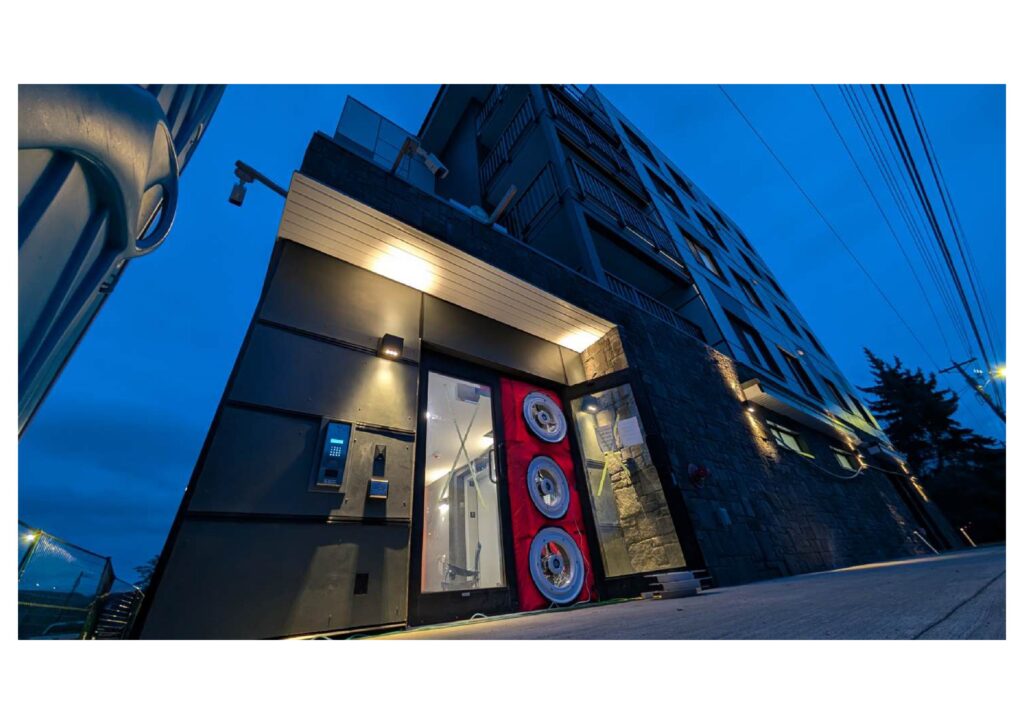
Energy advisors understand how a house functions as a system. Wall assemblies, ceiling insulation, window specifications, mechanical details, and local climate data all feed into a room-by-room F280 calculation. Because we have access to blower door testing equipment, we can use your home’s actual tested airtightness rather than an assumption, which is one of the most significant variables in getting the load right. The result reflects how your home is actually performing, not a conservative estimate built on incomplete information.
What the F280 Report Gives You
A completed CSA F280-12 report from Thrive Energy includes:
- A room-by-room breakdown of heating and cooling loads for every space in the building
- An input summary showing all specifications and assumptions used
- Documentation and support for mechanical sizing, permitting, and rebate applications with FortisBC, BC Hydro, and CMHC
- A site visit, including blower door testing
It’s something you can hand to your HVAC contractor before they price the job, giving them a clear target for equipment selection rather than asking them to estimate from scratch.
When to Get It Done
The right time to commission a CSA F280-12 heat load calculation is before your mechanical contractor finalizes equipment selection and pricing. Once a quote has been accepted and equipment ordered, there’s real friction in revisiting sizing decisions. Getting the F280 done early keeps all options open and puts the builder or homeowner in a stronger position when mechanical goes to tender.
If you’re already in the energy modelling phase of your project, which is typically where we get involved for Step Code compliance, that’s the perfect time to add the F280 to the scope. The building details are confirmed, the specs are fresh, and we can usually turn the report around alongside your compliance checklist with no additional information required.
Pricing
$400 to $600 + GST In BC, a CSA F280-12 room-by-room heat load calculation typically runs in this range, depending on complexity. When completed alongside your energy model, no additional project information is required. The report is delivered in a code-compliant format ready for mechanical permitting and rebate applications.
To put that in perspective: if a proper F280 supports stepping down one furnace or heat pump size, the equipment savings alone often exceed the cost of the report. And that’s before accounting for the long-term benefits of right-sized equipment running efficiently for the life of the building.
The Bottom Line
The BC Energy Step Code is pushing new home construction toward tighter, better-insulated buildings. Those buildings have lower heating and cooling loads than anything built a decade ago. The industry hasn’t fully caught up on the mechanical side, and equipment sizing habits formed in a different era are still common practice.
A CSA F280-12 heat load calculation is how you close that gap. It’s required by code, it protects your rebate eligibility, it gives your contractor a real target to work from, and it saves money on equipment that would otherwise be oversized.
Ready to add the F280 to your project?
Get in touch and we’ll take care of it.
778-867-0242 | brett@thriveenergyinc.com | thriveenergyinc.com
Lorem ipsum dolor sit amet, consectetur adipiscing elit. Ut elit tellus, luctus nec ullamcorper mattis, pulvinar dapibus leo.