If you work for a Canadian municipality, whether you’re a facilities manager, an energy coordinator, or a councillor trying to figure out how to upgrade that aging arena or city hall, this one’s for you.
There’s a significant funding program available right now through the Green Municipal Fund (GMF) specifically designed to help municipalities retrofit existing buildings. The aim is to achieve better energy performance and the numbers are substantial.
Let’s break it all down.
What Is the Green Municipal Fund’s Building Retrofit Program?
The GMF’s Capital Project: Retrofit of Existing Municipal Buildings program provides combined grant and loan funding to help Canadian municipal governments upgrade their existing buildings. The intent is for things like city halls, arenas, recreation centres, libraries, and pools to significantly reduce energy use and greenhouse gas (GHG) emissions.
We’re talking about funding that can cover up to 80% of eligible project costs. There’s a combined grant and loan ceiling of $10 million per project.
How Much Money Is Available?
Here’s the funding snapshot:
- Up to 80% of eligible costs covered through a combined grant and loan
- Maximum combined funding: $10 million
- Grant component: up to 20% of the total loan amount
One important thing of note: the grant and loan are a package deal. You can’t take just the grant without the loan – they’re structured together.
Who Can Apply?
Eligible applicants include:
- Canadian municipal governments (cities, towns, regions, districts, local boards)
- Municipal partners, which can include private sector entities, municipally-owned corporations, not-for-profit organizations, NGOs, regional or provincial organizations delivering municipal services, and research institutes like universities
- Indigenous communities are eligible as lead applicants if they’re partnering with a Canadian municipal government on an eligible project, or if they have a shared service agreement with a municipality related to municipal infrastructure or climate adaptation
So if your organization delivers a service on behalf of a municipality, it’s worth checking whether you qualify.
What Buildings Are Eligible?
The program covers a wide range of municipally-owned buildings, including:
- City halls and town halls
- Administrative buildings and police stations
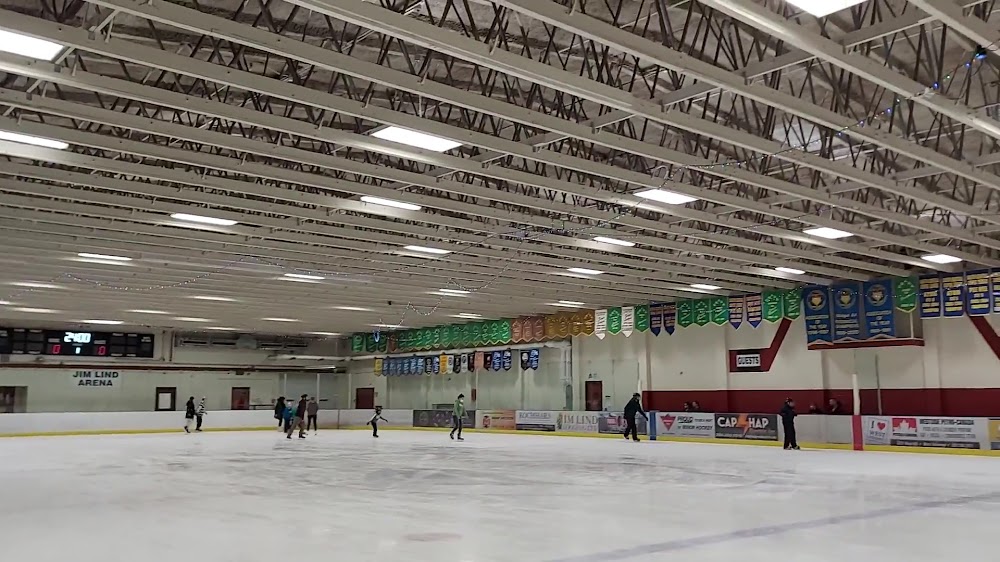
- Indoor ice rinks, arenas, and swimming pools
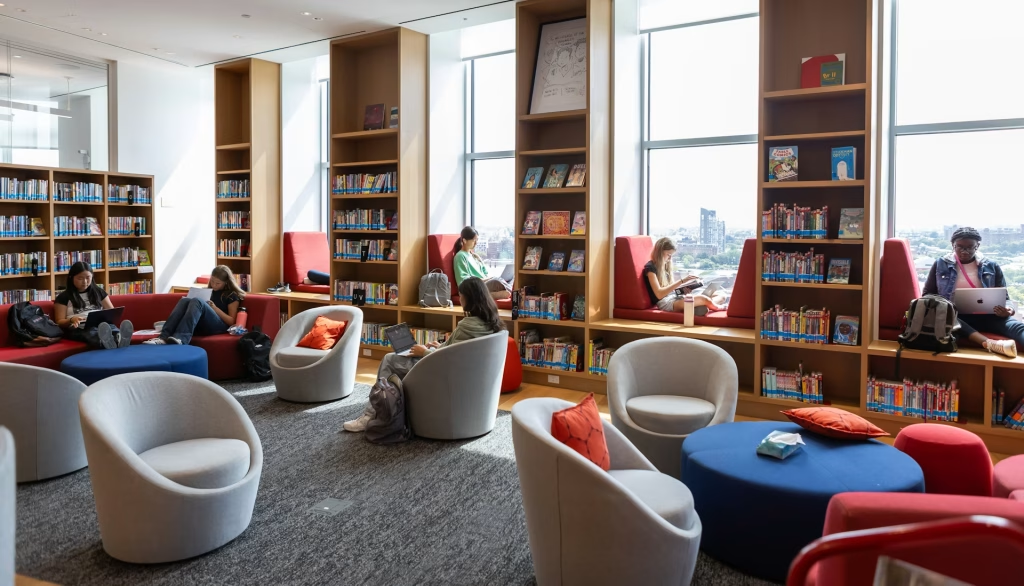
- Public libraries
- Community and recreation centres, gyms, clubhouses, and curling rinks
- Arts and culture facilities, performing arts venues, art galleries, and auditoriums
- Multi-purpose buildings that include one or more of the above functions
- Fire halls, paramedic centres, and public works buildings (as stand-alone retrofit projects)
If it’s unclear whether your building qualifies , especially if it involves a conversion or addition, it’s best to reach out directly at gmfinfo@fcm.ca before applying.
What Does the Project Need to Achieve?
This is where the technical requirements come in, and it’s worth understanding them clearly before starting an application.
The Core Goal: Deep GHG Reductions
GMF is looking for projects that will reduce a building’s GHG emissions by at least 50% within 10 years and achieve best practice energy targets within 20 years. This retrofit program is designed for meaningful, phased decarbonization.
Energy Use Intensity (EUI) Targets
Projects are assessed against Energy Use Intensity (EUI) benchmarks. This measures how much energy a building uses per square metre per year (kWh/m²/y). Targets vary by building type and climate zone:
Office-type buildings (city halls, libraries, town halls):
- Climate zones 4, 5, and 6: target of 95 kWh/m²/y
- Climate zones 7 & 8: target calculated using a formula based on heating degree days
Non-office buildings (arenas, pools, fitness centres):
- Must be modelled using NECB 2020 standards
- Proposed design must use at least 25% less energy than the NECB 2020 baseline model
Fossil Fuel Phase-Out Requirements
- In climate zones 4 and 5: complete fossil fuel phase-out is required; ie. no backup fossil fuel use permitted
- In climate zones 6 and above: full phase-out required when outdoor temperatures are -15°C and above; fossil fuel space heating is only permitted below -15°C
For the Okanagan (climate zone 5), this means a full fossil fuel phase-out is a firm requirement for your project to qualify.
What’s a Retrofit Pathway, and Why Does It Matter?
GMF structures these projects around the concept of a retrofit pathway: a phased sequence of measures that moves a building toward net-zero over time. A typical pathway might look like this:
- Phase 1 (Years 0–10): Passive strategies, envelope improvements, energy conservation measures
- Phase 2 (up to 10 years): Capital equipment replacement and partial fuel-switching, achieving a 50% GHG reduction
- Phase 3 (Years 10–20): Complete conversion to non-fossil fuel energy and alignment with EUI targets
Your application needs to demonstrate that your project fits within a pathway like this, either by referencing a GMF-funded retrofit pathway feasibility study, or by providing equivalent feasibility documentation.
Tip: If you haven’t done a feasibility study yet, GMF also funds those separately. Starting with a study grant can set you up perfectly for a capital project application.
What Upgrades Are Eligible?
Eligible retrofit and renewable energy upgrades include:
- HVAC systems
- Building insulation
- Windows and doors
- Hot water heaters
- LED lighting and lighting controls
- Solar panels
- Geothermal heat pumps
GMF strongly encourages applicants to consider a portfolio approach, applying for retrofits across multiple buildings at once, rather than tackling them one at a time.
Are There Other Factors That Improve Your Application?
Yes. While all eligible projects are considered, GMF scores applications on additional criteria that can improve your chances:
Equity Considerations
Projects are evaluated on whether they incorporate anti-racism, equity, inclusion, and Reconciliation principles; inclusive community engagement; social procurement; and whether they generate broader socio-economic benefits like improved accessibility or inclusive employment.
Multi-Solving
Higher scores go to projects that achieve multiple benefits beyond energy savings, such as potable water conservation, biodiversity improvements, or sustainable materials management.
How Do You Apply?
The application process has six phases:
- Pre-application submission – Submit through the online funding portal. Create a client profile and follow the steps.
- Eligibility determination – GMF reviews your pre-application within 15 business days.
- Full application submission – If eligible, you’ll be invited to submit a complete application form and project workbook.
- GMF project officer review – A project officer is assigned to review your file and work through any outstanding questions with you.
- Peer and internal review – An external expert panel evaluates the application; there’s also an internal review process.
- FCM funding decision – Capital project decisions involve FCM’s Board of Directors. Expect 4 to 6 months from full application submission to a funding decision.
Applications are accepted year-round, though the program may close when all funding is allocated.
How Can We Help?
This is exactly the kind of project where having an experienced energy modelling team in your corner makes a real difference.
GMF applications require detailed energy models, EUI calculations, NECB 2020 compliance documentation, and a clearly articulated retrofit pathway. That’s what we and our partners do. Whether you’re at the feasibility study stage or ready to build a full capital project application, Thrive Energy together with our Professional Engineering partners can help you put together the technical documentation that gives your application the best possible chance.
Reach out to us to talk through your building and where to start.
Quick Reference: GMF Municipal Building Retrofit Funding
| Detail | Info |
|---|---|
| Max funding | $10 million (combined grant + loan) |
| Coverage | Up to 80% of eligible costs |
| Grant component | Up to 20% of total loan |
| Who can apply | Municipalities, municipal partners, Indigenous communities with municipal partnerships |
| GHG reduction target | 50% within 10 years |
| Application deadline | Year-round (until funds allocated) |
| Decision timeline | 4–6 months after full application |
| Contact GMF | gmfinfo@fcm.ca / 1-877-417-0550 |
For more information, visit the GMF program page directly or contact Thrive Energy to discuss your project.