
If you own a home in Rutland (or a similar older neighbourhood), particularly one of the classic 1970s, 1980s, or early 1990s split-levels or basement ranchers common near Hollywood Road, Dougall Road, and Rutland Middle School, you know exactly how punishing an Okanagan summer can be.
When summer temperatures in Kelowna climb into the high 30s and push past +40°C during a heat wave, these homes often turn into two distinct microclimates: a freezing cold basement and an uncomfortably hot upper floor. If your air conditioning system is constantly running, making a loud racket, and driving your FortisBC utility bills through the roof, the problem usually isn’t just your AC unit. It’s a symptom of aging building components.
To fix your high summer cooling bills permanently, you must understand the three distinct ways older Rutland structures fail to manage extreme summer heat loads.
The single biggest structural vulnerability in older Rutland residential layouts is a degrading thermal barrier. Over the past 30 to 50 years, the original attic insulation in these homes has settled, compressed, or been shifted by past trade work. In many cases, it drops well below modern building code standards (which require up to R-50 values).
When the intense Okanagan sun beats down on your roof all afternoon, your attic space transforms into a closed thermal container, easily reaching temperatures upwards of +60°C.
Because heat naturally transfers toward cooler spaces, that trapped attic heat acts like a massive radiator. Without a proper thickness of insulation to block it, that extreme heat pushes straight down through your unsealed ceiling and floods into your upper-level rooms. No matter how hard your air conditioner blows, it is constantly fighting an overhead heating element.
Modern high-performance residential construction relies on a continuous, uninterrupted air barrier to separate the indoor environment from the outdoor elements. Homes built in the 1970s and 1980s simply do not have this protection.
Older split-level homes are notorious for structural air leaks concentrated around:
These hidden gaps allow hot outdoor air to seep continuously into your living spaces, raising your indoor temperatures. To make matters worse, older double-pane or clear single-pane windows lack modern, low-emissivity (Low-E) coatings. Without Low-E technology, your windows act like greenhouse glass, magnifying the direct solar radiation entering your south, east, and west-facing rooms and trapping it inside.
Because hot air naturally rises and cool air sinks, split-level floor plans are highly prone to a building science phenomenon known as the Stack Effect.
As radiant heat penetrates the upper floor, it creates a severe indoor microclimate imbalance. Your centralized thermostat (usually located on the main or upper level) detects this heat and forces your air conditioning system to run continuously.
However, because cold air is dense and falls naturally to the lowest point of the home, your lower level or basement remains uncomfortably cold while your upper bedrooms stay sweltering. This structural reality forces your cooling equipment into a damaging cycle known as short-cycling:
Air conditioners draw their absolute maximum electrical current when they first start up. A short-cycling unit uses vastly more power than a system running at a steady, optimized pace (think of it like fuel mileage: stop-and-go city driving versus the highway), which sends your monthly FortisBC bill skyrocketing while actively wearing out the A/C compressor. Typically, older HVAC units are also oversized, which adds to the problem.
The Building Science Solution
Before you spend thousands of dollars replacing an old air conditioner with a brand-new, larger unit, stop. Installing an oversized AC system will actually worsen your short-cycling problem, leading to even higher power bills and poor indoor humidity control.
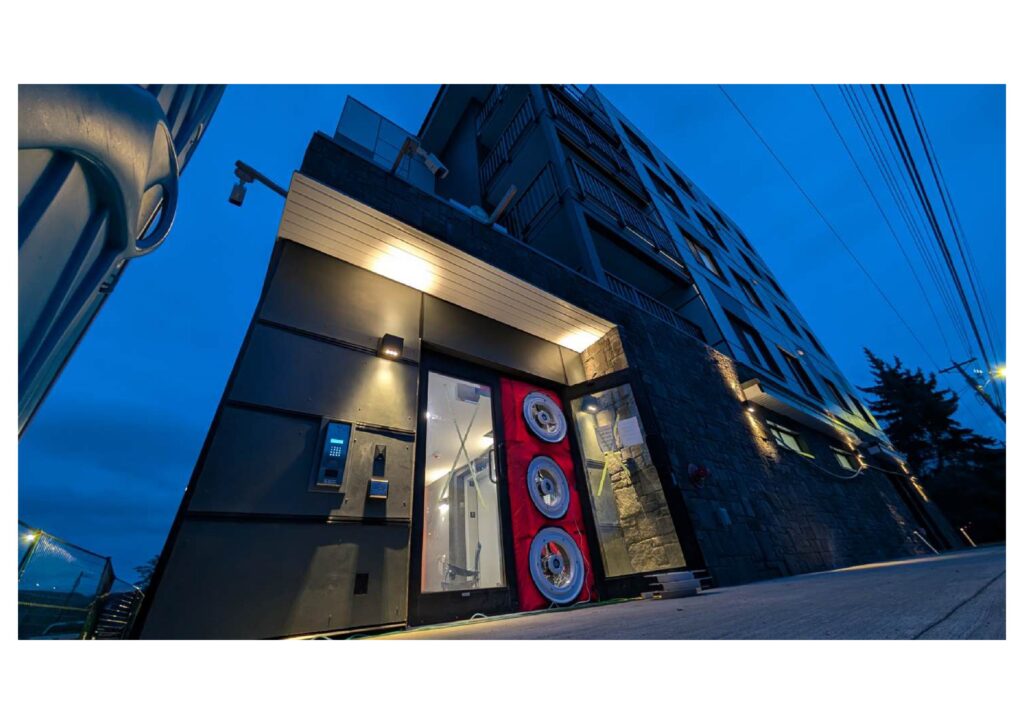
The smartest first step is to fix the building envelope itself. Booking a professional EnerGuide Home Energy Assessment allows an NRCan-Registered Energy Advisor to perform a physical blower door test and thermal imaging review on your property. This diagnostic process locates the exact position of your home’s hidden air leaks, missing air barriers, and thermal bridging gaps.
Often, simple targeted retrofits such as air-sealing the attic’s top plates, sealing window trim, and topping up attic insulation to modern performance targets can permanently cut your building’s overall cooling load. By keeping the heat out of your home first, you can safely downsize to a smaller, right-sized cooling system or a cold-climate heat pump. This ensures year-round comfort, stable indoor temperatures, and permanent relief from skyrocketing utility bills.
As a certified iSolar Solutions retailer and installer, we can also improve attic ventilation with solar powered roof or gable fans that actively pull superheated air out of the attic, reducing the oven effect and keeping attic temperatures more stable. Paired with air-sealing and insulation, these envelope-first measures are far more cost effective than simply upsizing your HVAC, which treats the symptom rather than the cause.
At Thrive Energy Inc., we combine building science with local expertise to solve home comfort challenges across Kelowna, the Okanagan valley and beyond. If you are ready to stop guessing and start diagnosing your home’s energy leaks, book your comprehensive home evaluation today.
No, installing a larger AC unit will make your high utility bills and comfort issues worse. In building science, this causes a major problem called mechanical short cycling.
Because a larger system dumps a massive burst of cold air into the house very quickly, it will rapidly cool down the area immediately surrounding your thermostat (usually on the main floor) and shut off before it can pull the heavy, stagnant radiant heat out from your upstairs bedrooms. Furthermore, air conditioners require a steady, prolonged run cycle to properly dehumidify the air. Short cycling leaves your indoor air humid and sticky, while drawing maximum electrical current every time the compressor restarts, significantly driving up your FortisBC bill and the wear and tear on your equipment.
Before upgrading your equipment, you must address the building envelope first. Performing an energy evaluation before HVAC upgrades helps find the right solution for your space so that a smaller, optimized system can heat and cool your home more evenly and efficiently. If your property is located within our core urban boundaries, you can easily set up a diagnostics appointment via our localized Rutland Energy Consulting Matrix.
While most homeowners assume drafts only happen around doors and windows, the most severe structural air leaks in 1970s–1990s split-levels are completely invisible behind your finished walls. In building science, these are classified as systemic bypasses:
The absolute only way to accurately map these leaks is through a physical building envelope depressurization check. Our certified technicians isolate these problem zones using advanced diagnostic equipment, helping builders and homeowners protect their spaces against the intense Rutland Climate Matrix.
Adding insulation (like blowing in loose-fill fibreglass or cellulose to hit modern R-50-60 standards) is a massive step forward, but it will only work at peak efficiency if you mitigate air leakage.
Insulation behaves very much like a wool sweater; if cold air blows straight through it, it loses its thermal resistance. If you do not seal the drywall penetrations, attic hatches, and plumbing stacks before dumping new insulation over them, hot air leaks from your home will continue to travel freely through the porous insulation material. This process degrades your new investment and creates high localized condensation risks during freezing winter drops.
Yes, but the order of operations matters. A solar powered attic fan works by actively exhausting the superheated air that builds up under your roof on a hot Okanagan afternoon, when an unventilated attic can climb past +60°C. Pulling that air out lowers the peak attic temperature, which means less radiant heat pushing down through your ceiling and less runtime demanded of your air conditioner. Because the fan runs entirely on its own solar panel, it does this with no added electricity cost and no wiring.
Thrive Energy is a certified iSolar Solutions retailer and installer. Their FLEXLine fans use a patented design that retrofits into your existing roof or gable vents, run on a quiet brushless motor, and are sized from roughly 250 to 1,125 CFM, so we can match the unit to your attic rather than oversizing it. Installed on a properly sealed and insulated attic, a right-sized solar fan is an affordable way to shave your peak cooling load and help your shingles and insulation last longer by keeping the attic cooler and drier year round.