If you’re running major renovations in BC and you’re not having the CleanBC rebates conversation with your clients before work starts, there’s a good chance the homeowner is leaving thousands of dollars on the table. And once the job is done, that money is gone.
CleanBC rebates through the Home Renovation Rebate Program put real cash back in homeowners’ pockets for energy efficiency upgrades: insulation, heat pumps, windows, hot water tanks, ventilation. On a comprehensive whole-home retrofit, CleanBC rebates can stack into $8,000 to $14,000 depending on the scope of the work and what the upgrades are replacing.
For contractors doing major renovations, this matters for two reasons. First, your clients almost certainly don’t know about it. Second, the rebates only unlock if a specific step happens before work begins. Miss that step, and the rebate is permanently off the table.
01What’s actually on the table
The Home Renovation Rebate Program, the umbrella under which most CleanBC rebates flow, is a partnership between BC Hydro, FortisBC, and the Province of BC, administered through CleanBC Better Homes. It’s open to BC homeowners regardless of income level, and it covers a wide range of energy upgrades that a major renovation typically already includes.
The rebate categories most relevant to large-scale renos:
- Insulation rebates for attic, exterior walls, basement walls, basement and crawlspace rim joists, and crawlspace cavities. Stacking across multiple areas can reach up to $5,500 on its own.
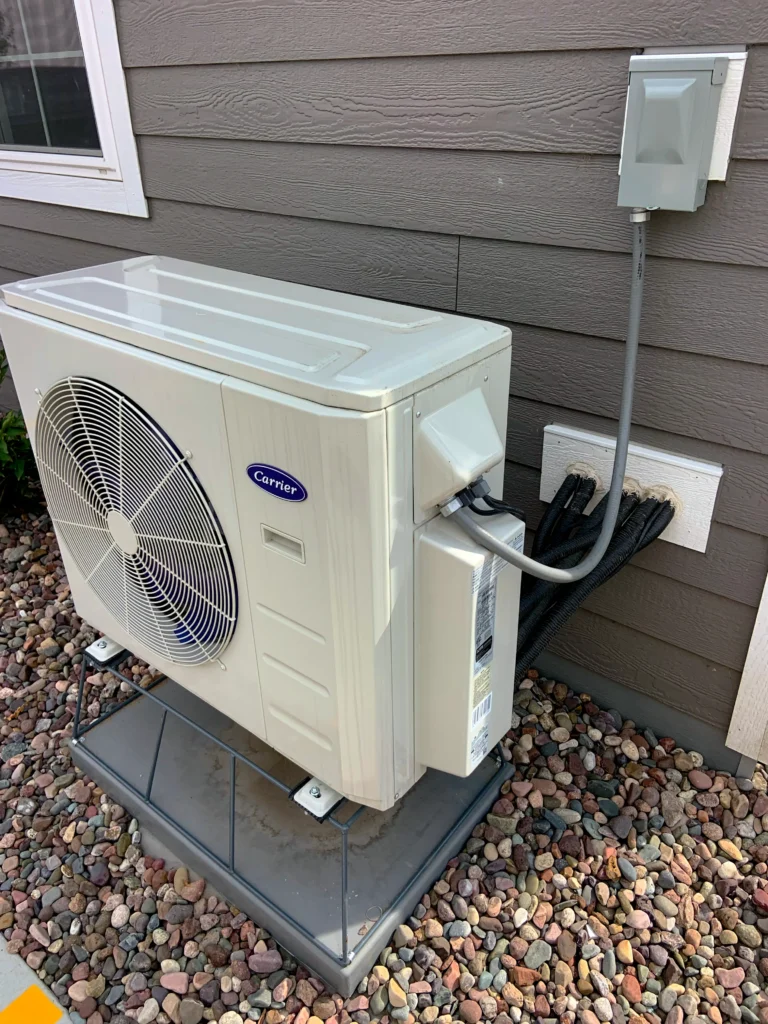
- Heat pump rebates of up to $4,000 for qualifying air-source heat pumps replacing electric heating, plus up to $1,000 for heat pump water heaters replacing electric tanks. Higher rebate tiers apply to homes north of 100 Mile House.
- Window and door rebates for high-performance replacements meeting ENERGY STAR thresholds, up to $2,000.
- Two-upgrade bonus of $300 for completing two qualifying insulation upgrades within 18 months.
- Home Energy Improvement Bonus of up to $2,000, paid at $20 per percentage point of EnerGuide rating improvement on projects with three or more qualifying upgrades.
Income-qualified households can access additional rebate tiers under the CleanBC Better Homes Energy Savings Program, which covers a much higher percentage of upgrade costs but operates as a separate stream.
02The catch most contractors and clients miss
This is the single biggest gotcha in the program, and it’s the reason most renovations miss out. A homeowner who completes a $40,000 renovation and then learns about the rebate program has no path back. The pre-retrofit EnerGuide evaluation needs to be scheduled in the window between when the homeowner is committed to the project and when work physically starts.
For contractors, the practical implication is simple. If you have a major renovation in your pipeline, the EnerGuide question needs to come up at the same time as the contract conversation. Once shovels are in the ground, the door is closed.
03A real Okanagan retrofit, and what it unlocked
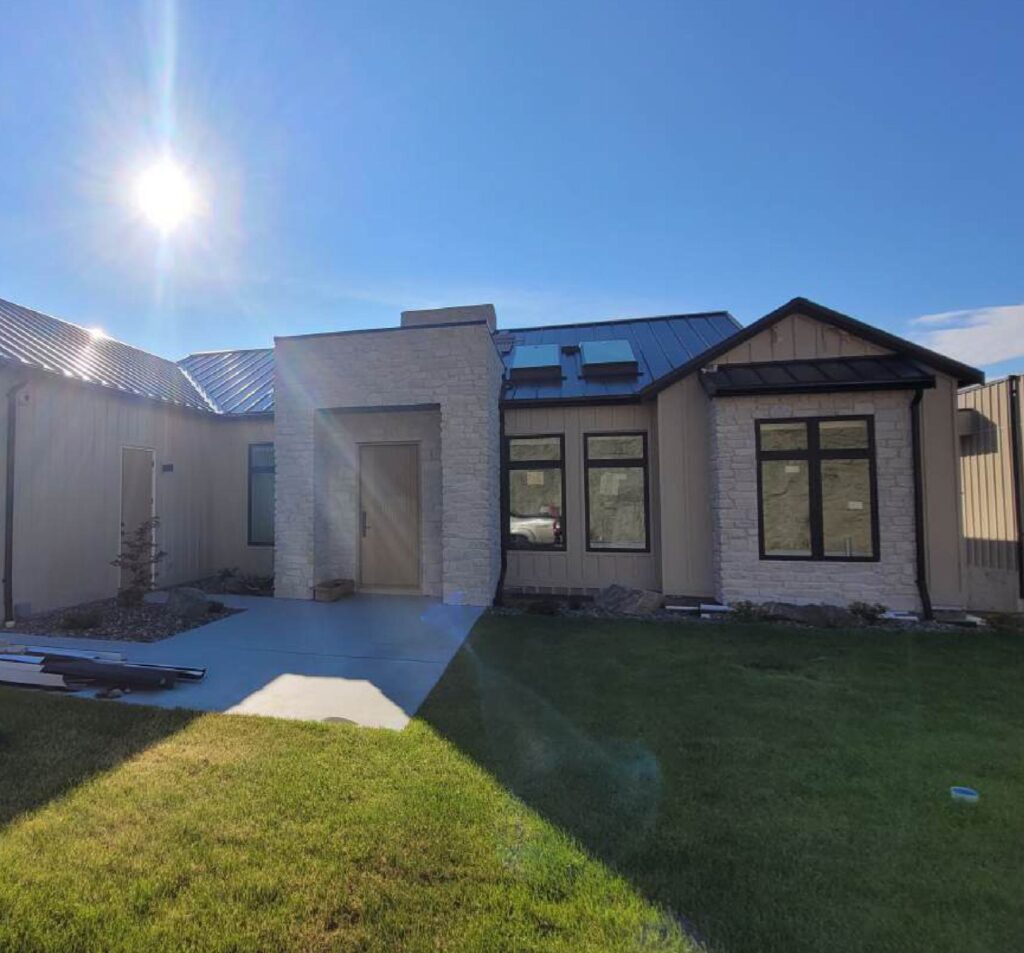
To put real numbers on this, here’s a project we recently modeled. A 1960s Okanagan home undergoing a whole-home retrofit. The pre-upgrade rating reflected the building stock you’d expect from the era: poorly insulated, inefficient mechanicals, high energy use. (For background on why we sequenced the upgrades the way we did, see our piece on envelope-first vs. envelope-last retrofits.)
GHG emissions for the same home dropped from 7.8 tonnes CO₂ per year to 1.1 tonnes, an 86% reduction.
The upgrade package
04The CleanBC rebates math on this project
1960s Okanagan whole-home retrofit
This case study reflects the CleanBC rebates applicable to this specific upgrade package. Different upgrade packages unlock different rebates. A retrofit where the heat pump replaces electric heating, for example, would add up to $4,000 more. Heat pump water heaters add up to $1,000, and qualifying window upgrades add up to $2,000. The exact stack depends on the scope of the project and what the upgrades are replacing.
05Why this matters for your business
For contractors running major renovations, knowing about CleanBC rebates isn’t just a nice-to-have. It’s a competitive edge with real client impact.
You become the contractor who saved them thousands
A homeowner who gets a rebate cheque for $7,000 or $8,000 six months after their renovation tells everyone who’ll listen. That’s how referral pipelines get built.
You differentiate without competing on price
Most renovation contractors are competing on the same things: timeline, quality, price. Bringing the rebate conversation to the table early sets you apart as the contractor who’s actually thinking about the client’s full project budget.
You unlock projects that couldn’t quite pencil out otherwise
Renovations often die at the budget conversation. A homeowner sitting at $35K who finds out they can claw back $7K starts thinking about $42K projects instead. That’s a bigger scope of work for you and a better outcome for them.
You preempt the “why didn’t you tell me” complaint
Once a renovation is done and a homeowner discovers the rebate program independently, they’re going to ask why nobody mentioned it. Avoiding that conversation is worth raising it upfront, even if the homeowner ultimately decides not to pursue rebates.
You build relationships with energy advisors and registered contractors
Insulation rebates require installation by a Program Registered Contractor. Energy modelling and EnerGuide labels require a Registered Energy Advisor. Both relationships pay back over time.
06How the partnership works in practice
Here’s the practical version of how a major renovation actually flows when CleanBC rebates are in play.
Pre-retrofit evaluation
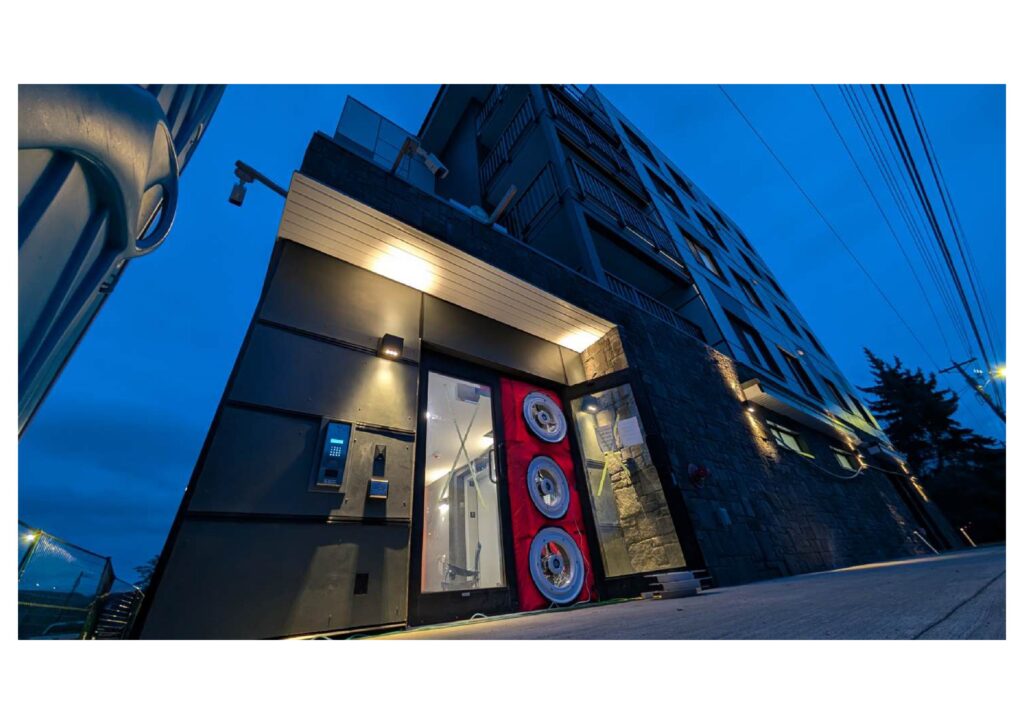
Before any renovation work starts, a Registered Energy Advisor visits the home, runs a blower door test, and produces a pre-retrofit EnerGuide label. This is the document that anchors the rebate eligibility.
Renovation work
The contractor runs the job as normal. Insulation rebates require a Program Registered Contractor for the insulation portion. Other trades work as usual. Receipts and product specs are kept for the rebate file.
Post-retrofit and rebate
After work is complete, the energy advisor returns for a post-retrofit evaluation that confirms the upgrades. The homeowner submits the rebate application within six months of the final invoice. The cheque arrives.
The energy advisor handles the technical side: the pre and post evaluations, the modelling, and the EnerGuide labels the program requires. The homeowner submits the rebate application using those labels and the contractor’s invoices. Your job stays focused on running the project.
07A few practical heads-ups
A few other things worth knowing before pulling the trigger:
- Final rebate applications must be submitted within six months of the final invoice date. Don’t sit on the paperwork.
- Insulation rebates can only be claimed once per area, so plan the upgrade for the highest R-value the assembly can take.
- Rebates can’t be combined with the income-qualified Energy Savings Program for the same upgrade. The homeowner runs through one stream or the other.
- The Canada Greener Homes Grant and Loan programs have both closed to new applicants. Don’t promise federal money that isn’t currently available. If your client is buying or refinancing, point them to CMHC Eco Plus and Eco Improvement, which can stack with CleanBC rebates.
- Current rebate amounts are published at betterhomesbc.ca. Always verify the latest figures before quoting numbers to a client.
08Where Thrive Energy fits in
For renovation contractors in the Okanagan, we handle the energy advisor side of the equation: the pre-retrofit evaluation, the energy modelling that demonstrates rebate eligibility, the post-retrofit verification, and producing the EnerGuide labels the rebate program requires.
You run the job. We do the EnerGuide work. The homeowner submits the CleanBC rebates application using our labels and your invoices. Three clear roles, and the client gets thousands back.
If you have a major renovation on the books or in the pipeline, the cheapest insurance against missed rebates is a quick conversation before the job starts. We can run a pre-screen on the property, give you a realistic estimate of what’s potentially on the table, and time the pre-retrofit evaluation to fit your schedule.
09The CleanBC rebates takeaway
CleanBC rebates are real money sitting on the table for renovation clients who don’t know about them. The contractors who ask the right question early, before any work begins, position themselves as the renovator who saved their client thousands.
The lift on your end is small. A quick conversation before the contract is signed, and the pre-retrofit evaluation fits around your project schedule. The payoff for your client lands months after the work wraps.
Got a major reno coming up? Let’s talk before the job starts.
We can run a quick pre-screen on the property, give you a realistic estimate of the rebates potentially on the table, and schedule the pre-retrofit EnerGuide evaluation to fit your project timeline.
Email: brett@thriveenergyinc.com
Phone: 778.867.0242
Web: thriveenergyinc.com