
A blower door test with diagnostics on a Southeast Kelowna home found that wildfire smoke was coming in mainly through the mechanical system, not through gaps in the walls. With the bathroom fans or range hood running and the furnace off, smoke was getting in mainly through the attic pot lights, the furnace fresh air intake and the open combustion make-up air duct.
Noah Salisbury, Registered Energy Advisor, recommended filtered ventilation (an HRV), running the furnace fan on a schedule, filtering (not capping) the make-up air, sealing the pot lights and fixing the exterior dampers.
Testing and report by Noah Salisbury, Registered Energy Advisor, Thrive Energy Inc., August 2026.
Project at a glance
| Project detail | Description |
|---|---|
| Location | Southeast Kelowna, Kelowna, BC |
| Project type | Existing single family home with a dual fuel heat pump and a gas water heater |
| Service | Blower door testing with diagnostics |
| Testing date | August 2026 |
| Main finding | Smoke was coming in mainly through the mechanical system, not through gaps in the walls |
The problem: smoke inside during wildfire season
The homeowner was getting smoke and poor air quality inside the house during wildfire season. The smell was worst when the furnace was off and the bathroom fans or range hood were running.
That timing was the first clue. Exhaust fans push air out of the house, and the same amount of air has to come back in somewhere. When the furnace isn’t running, nothing is filtering that air on the way in.
What Thrive Energy tested
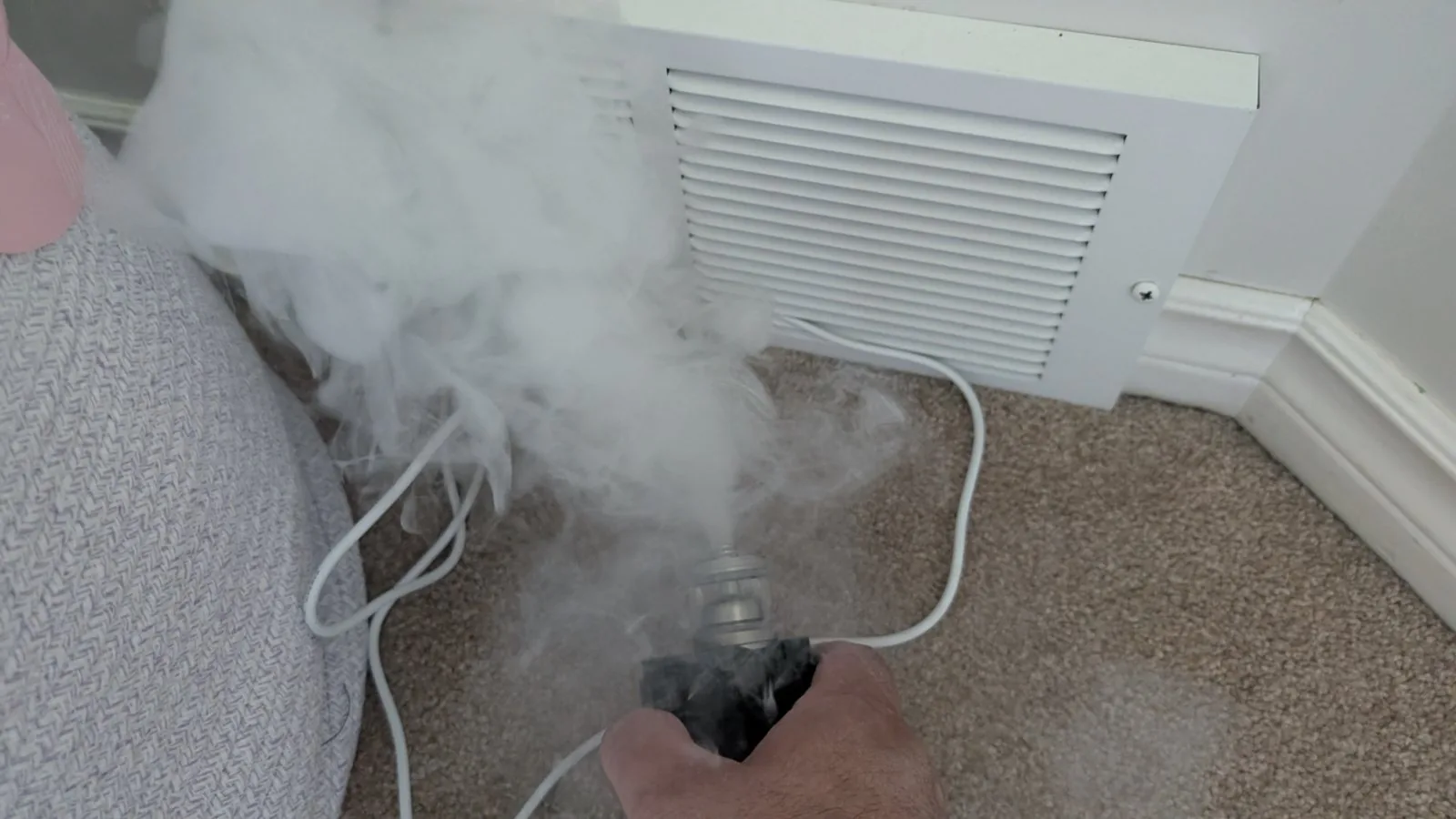
Noah ran a blower door test with diagnostics. A calibrated fan in an exterior door pulls the house negative, the same way the exhaust fans do but stronger and steadier. With the house under pressure, he went room by room and through the mechanical room and attic to find where outside air was coming in.
Where the smoke was getting in
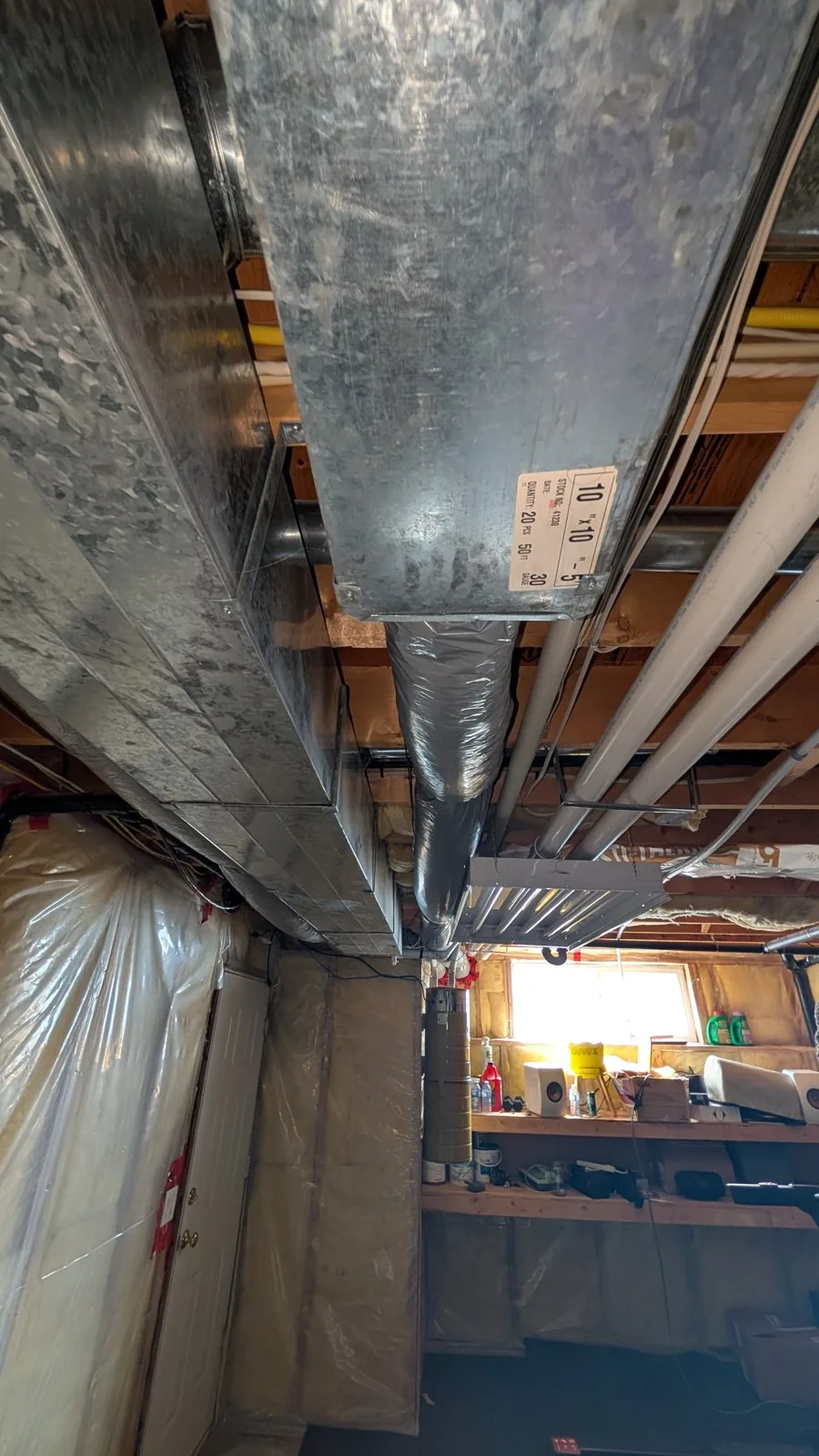
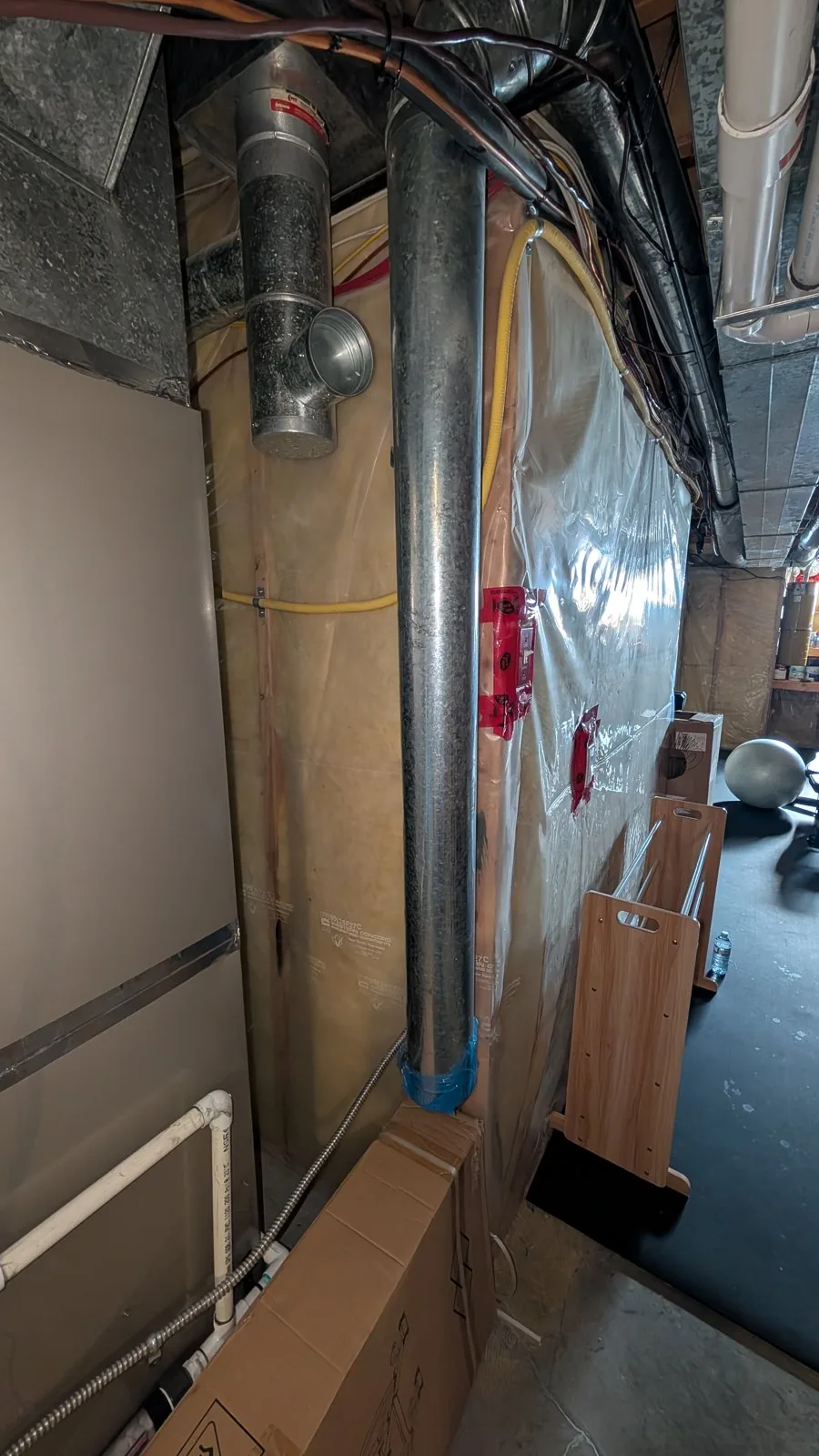
- Open combustion make-up air. The gas water heater is a conventional, naturally aspirated unit, so the mechanical room has a make-up air duct open to outside. It is supposed to be there. It also means any time the house goes negative, unfiltered outdoor air comes straight in.
- Fresh air intake tied into the return ducts. The furnace fresh air intake connects to the return ducts ahead of all the bedroom returns. When the house is negative and the furnace fan is off, outside air can be pulled through that intake and out the return grilles into every bedroom.
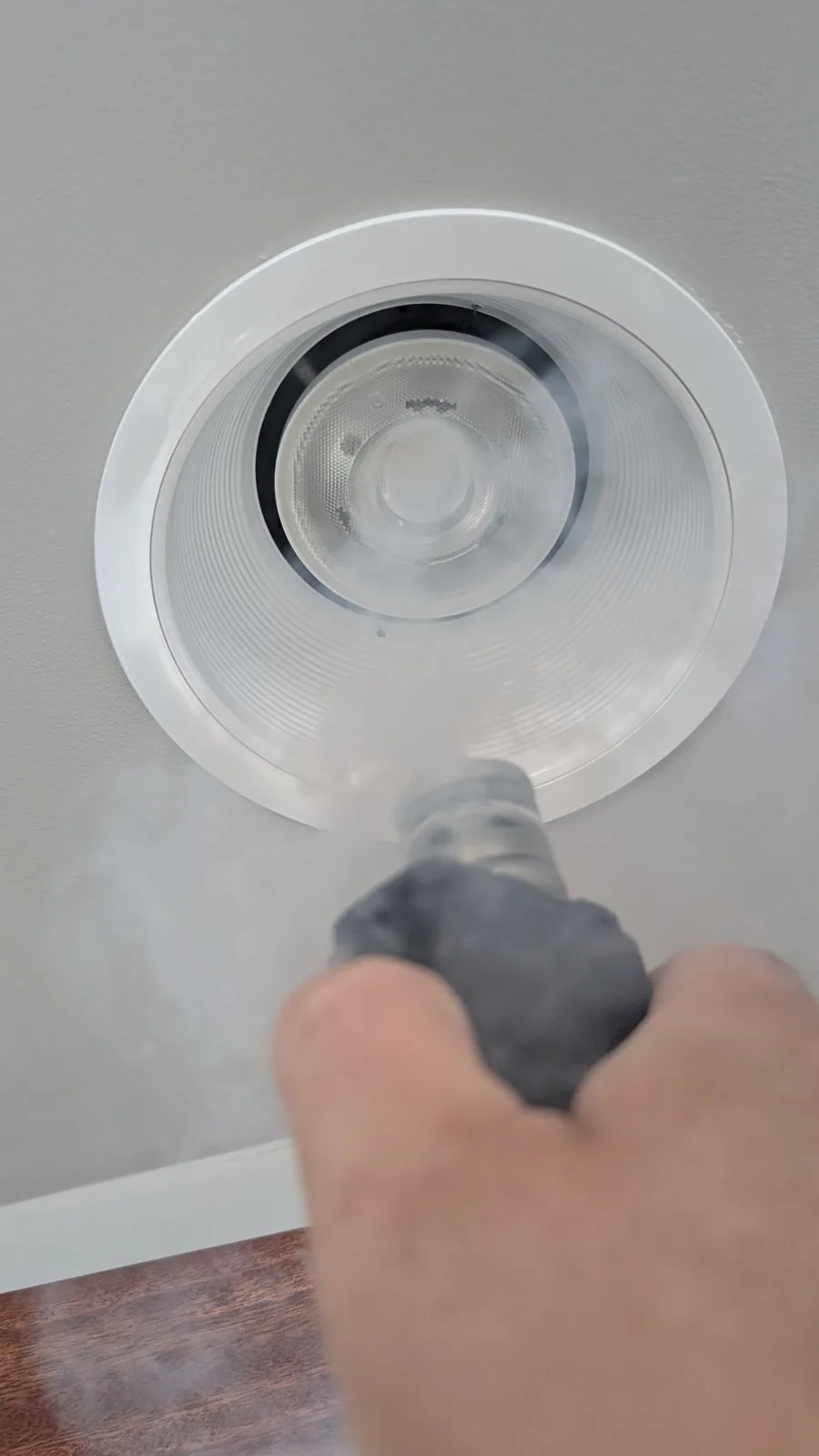
- Leaky attic pot lights. The recessed lights in the upper floor ceilings were unsealed and leaking a lot of attic air into the house.
- Doors. Several exterior doors needed adjusting or new weatherstripping.
- Exterior exhaust dampers. Some of the damper flaps on the dryer and range hood vents weren’t closing all the way. This was a smaller source of leakage.
Put together, when the fans were running and the furnace was off, smoke was getting in mainly through the attic, the fresh air intake and the combustion make-up air duct.
What Thrive Energy recommended
- Install an HRV with filtration. A heat recovery ventilator brings in outside air through a filter and balances the air going in and out of the house. The mechanical area was unfinished, so the install would be straightforward.
- Run the furnace fan on a schedule. 15 minutes every hour keeps the indoor air moving through the furnace filter.
- Filter the make-up air, don’t cap it. Until an HRV goes in, put a filter on the open end of the make-up air pipe. Capping it is not an option. The gas water heater needs that air so it doesn’t backdraft.
- Seal the upper floor pot lights. Replace the old cans with retrofit LED kits that seal the opening with a foam gasket.
- Fix the exterior dampers that aren’t closing properly.
If an HRV isn’t in the plan, an inline duct filter on the fresh air intake is another option. Thrive referred the homeowner to an HVAC contractor for the ventilation work.
What other Okanagan homeowners can take from this
- Smoke doesn’t only come through cracks. Fresh air intakes and make-up air ducts are open to outside by design. If they aren’t filtered, smoke comes in with the air.
- Exhaust fans pull outside air in. Bath fans, range hoods and dryers all push air out, and the same amount comes back in through whatever path is easiest.
- Never cap a combustion air duct. If you have a naturally aspirated gas water heater or furnace, it needs that air to vent safely. Filter it instead, and talk to your HVAC contractor.
- Old pot lights leak. Unsealed recessed lights under an attic can let a lot of attic air into the house, and gasketed retrofit kits are a simple fix.
For the wider picture of how smoke follows air pressure, read Why does my house smell like smoke during wildfire season?
Frequently asked questions
Why does wildfire smoke get worse when the bathroom fan or range hood is running?
Exhaust fans push air out of the house, and the same amount of air has to come back in somewhere. In this Southeast Kelowna home, when the fans were running and the furnace was off, smoke was getting in mainly through the attic, the fresh air intake and the combustion make-up air duct.
Can I cap my combustion make-up air duct to keep smoke out?
No. A naturally aspirated gas water heater or furnace needs that air so it doesn’t backdraft. Put a filter on the open end of the make-up air pipe instead, and talk to your HVAC contractor.
How did the blower door test find where the smoke was coming in?
A calibrated fan in an exterior door pulls the house negative, the same way the exhaust fans do but stronger and steadier. With the house under pressure, the advisor went room by room and through the mechanical room and attic to find where outside air was coming in.
What was recommended to stop the smoke?
An HRV with filtration, running the furnace fan 15 minutes every hour, filtering the make-up air until an HRV goes in, sealing the upper floor pot lights with gasketed retrofit LED kits, and fixing the exterior dampers. An inline duct filter on the fresh air intake is another option if an HRV isn’t in the plan.
Book a blower door test with diagnostics
If smoke or poor air quality is getting into your home, Thrive Energy can test the house under pressure and show you where outside air is coming in.
Call 778-867-0242 or contact Thrive Energy.
About The Author
