As Part 3 Energy Step Code requirements are in effect across BC, builders and developers now need to demonstrate air tightness performance on their projects. One of the most important parts of demonstrating compliance is airtightness testing.
This article is written for builders and project teams to learn how airtightness testing fits into Part 3 energy code compliance. In it, we review which responsibilities lie where, and what to expect when preparing a large building for air tightness testing.
Who Are the Providers of Large Building Airtightness Testing
For Part 3 projects, Registered Energy Advisors are well positioned to complete whole building airtightness testing. While the engineering firms completing the energy model can also do the testing, it’s most often not a service they offer. Thus a 3rd party may be required, and may also be more cost-effective.
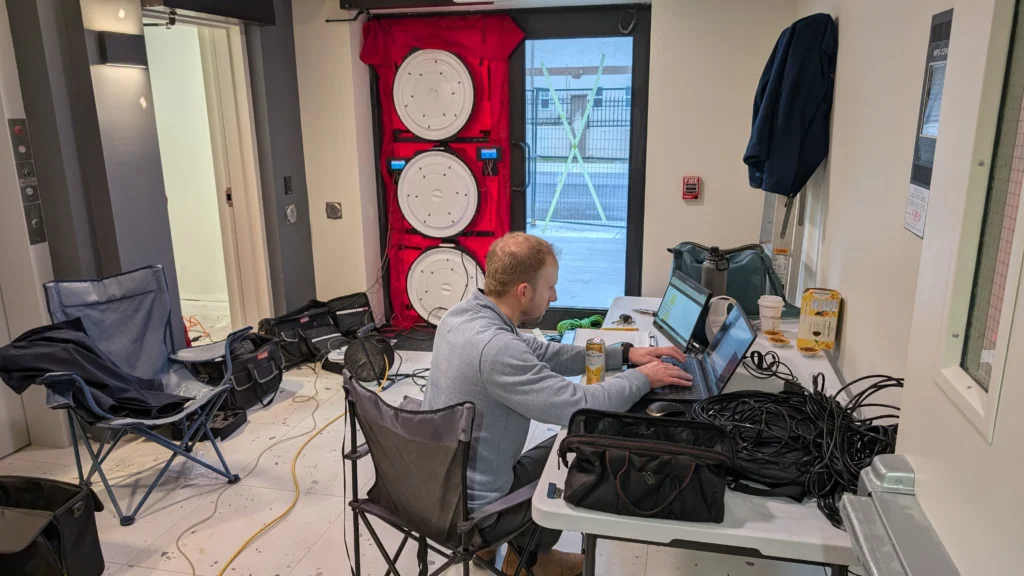
Field Testing
Airtightness testing is a construction and occupancy-stage verification activity. As Energy Advisors offering air tightness testing, we do not replace the role of the engineer or energy modeller. Instead, we provide the measured airtightness data that confirms whether the building enclosure meets the targets assumed in the model. This goes hand in hand with the engineer’s reporting to verify that the building is BC Energy Step Code compliant.
If building volume and exterior envelope area measurements cannot be sent over by the engineer, the Energy Advisor will need to calculate these values from the architectural drawings.
While Energy Advisors can do the whole kit and kaboodle as far as both energy modelling and in-field testing go for Part 9 construction – 3 storeys or less – commercial structures and buildings over 3 storeys require a Professional Engineer.
Often times, this means commercial projects should expect to work with both an engineer and an airtightness testing provider, like an Energy Advisor.
How Airtightness Testing Fits Into Part 3 Compliance
For Part 3 buildings requiring BC Energy Step Code compliance, airtightness testing is required to validate the enclosure performance used in the energy model. The Step Code framework includes checklists and documentation requirements at multiple stages.
The airtightness test results are summarized and noted in the final compliance documentation submitted to the Authority Having Jurisdiction. Achieving an airtightness result that aligns with the modelled value helps demonstrate that the building performs as intended.
Key Aspects of Part 3 Airtightness Testing:
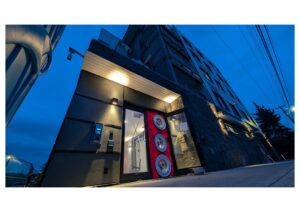
- Testing Method: Uses calibrated blower door fans to measure infiltration and exfiltration rates, testing the entire building envelope.
- Standards & Procedures: Tests are performed in accordance with ASTM E779, most often. For a list of allowable testing standards by building type see here.
- Metrics: Results are commonly reported in Air Changes per Hour (ACH) or Normalized Air Leakage Rate (𝐿/𝑠⋅𝑚2) at specific pressure differences (Typically 75 Pa for large buildings.)
- Timing: While final air tightness testing is mandatory for occupancy, mid-construction testing is highly recommended to identify and fix leakage points.
- Documentation: Results are submitted to the applicable AHJ (authority having jurisdiction) via the Part 3 Energy & Zero Carbon Checklist.
- Target Performance: As Step Code levels increase, buildings must meet more stringent air tightness targets to achieve energy efficiency goals. Step code requirements vary by building type and municipality but minimum Step 2 is required BC-wide for Part 3 buildings.
What Builders Should Expect On Test Day
Large building airtightness testing is significantly more involved than single family testing. It requires coordination and preparation. Failure to prepare can result in failed tests and add up to extra expense.
Testing is typically performed with the building treated as a single pressure zone. Multiple blower door fans are installed, and both depressurization and pressurization tests are completed with results averaged to demonstrate enclosure behaviour.
For high rise buildings, however, testing is usually done in isolated zones/floors. Guarded testing is performed on multiple floors to achieve an accurate result.
Environmental conditions such as wind, stack effect and temperature stability matter during testing. Testing should be scheduled during periods of low wind to ensure reliable data. If wind speeds are too high, testing may need to be re-booked.
What Building Preparation Is Required
Proper preparation is essential for a successful test. This is an area where early communication between the builder and the Energy Advisor really pays off.
Team members preparing the building must:
- Close and latch all exterior doors and windows.
- Prope open all interior doors to allow pressure equalization throughout the building.
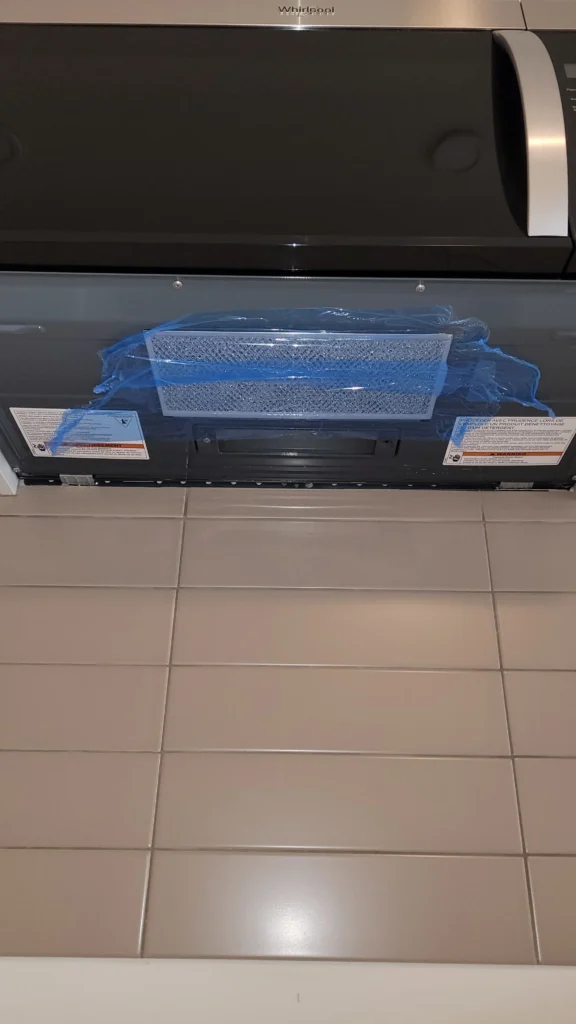
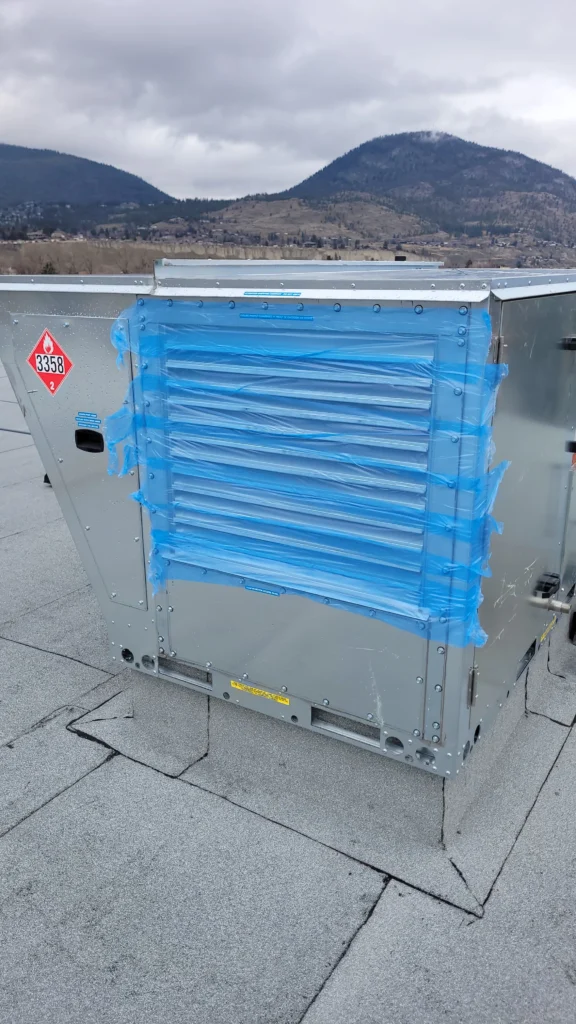
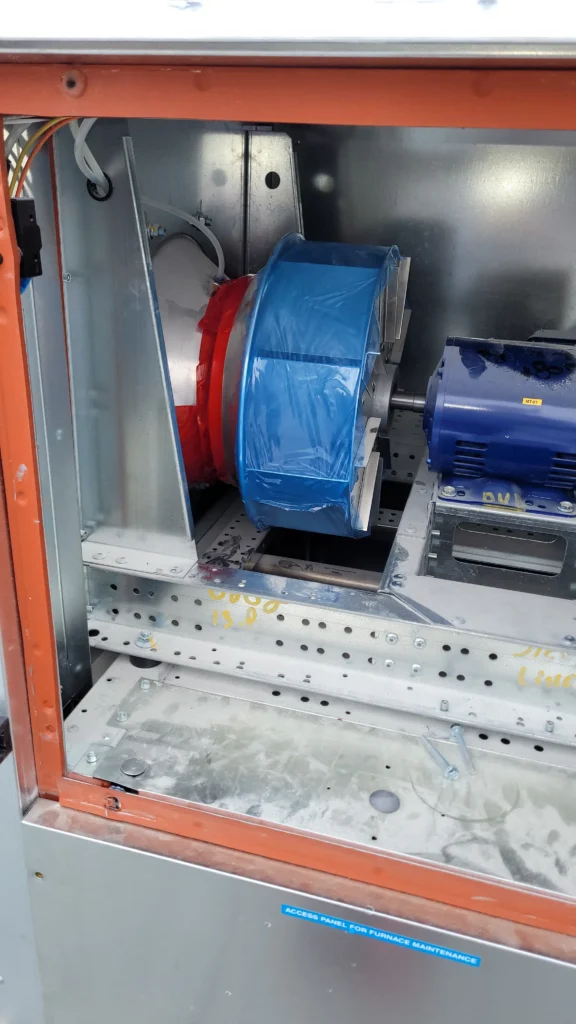
- Temporarily shut-down and seal all mechanical ventilation systems, including ERVs, HRVs, range hoods, exhaust fans, and make-up air units, where accessible.
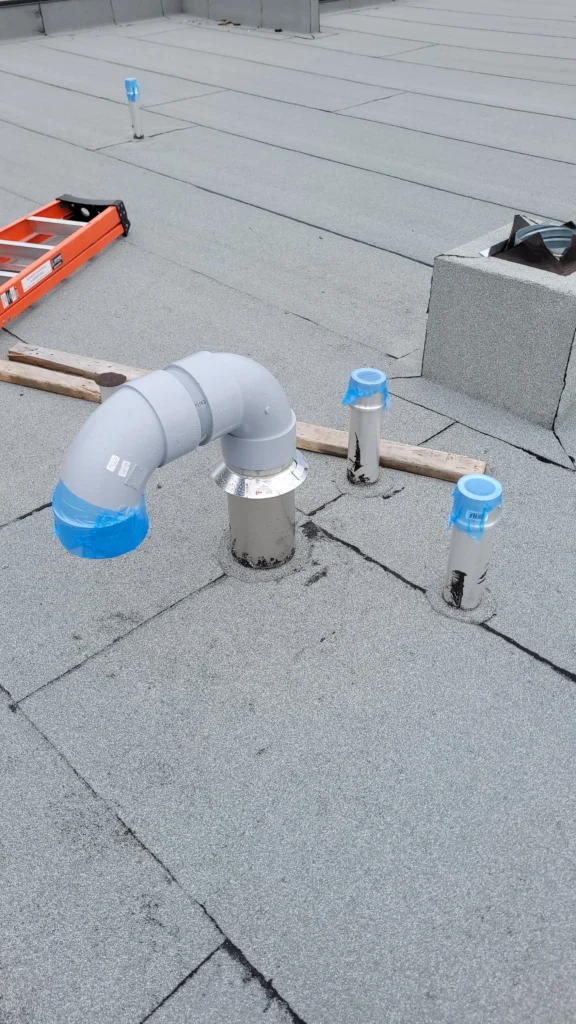
- Seal from the interior (or exterior if safe access is available) dryer vents, air intakes, and other exterior penetrations.
- Coordinate elevator shafts, stairwells, and service spaces as applicable to be included in the test volume.
In completed or near-completed buildings, not all exterior penetrations can always be temporarily sealed due to height or access limitations. These conditions are documented as part of the test and are common for Part 3 projects.
Sealing of openings is a time-intensive endeavour but must be completed thoroughly in order for test results to be successful and accurate.
Failure to complete proper site-prep means that the team arriving to do air tightness testing may have to reschedule testing once the building is ready. Alternatively, they may complete the building preparation at their own costs, which increases testing expenses.
Why depressurization and pressurization results can differ
Builders are often surprised to see that results obtained testing a building using depressurization, differ from that using pressurization. This is normal for large, multi-storey buildings.
Under positive pressure, certain components like dampers, and vents can open, increasing measured leakage. Stack effect and building height also influence pressure distribution across the enclosure. Under depressurization, however, these dampers will typically seal themselves, thus giving a different result.
It’s for this reason that professional interpretation of results is critical. Data quality metrics are reviewed to determine which test condition best represents true performance.
What builders gain from airtightness testing
Beyond compliance, airtightness testing provides valuable feedback on construction quality and enclosure detailing. It can help identify systemic leakage paths, validate air-barrier strategies, and reduce the risk of performance issues after occupancy.
Builders who engage in airtightness testing early and treat it as a quality assurance step, rather than a last minute hurdle, often see smoother compliance processes and more predictable outcomes.
Final thoughts
Large building airtightness testing is a specialized service that plays a critical role in Part 3 energy compliance. While Professional Engineers typically complete the energy modelling for these buildings, Energy Advisors are frequently providing the field testing and verification needed to confirm real-world performance.
Clear expectations, early coordination, and proper building preparation are key to successful testing. For builders planning Part 3 projects, engaging an experienced airtightness testing provider early in the construction process can help avoid delays and surprises at the occupancy stage.
If you are working on a Part 3 project and need support with whole building airtightness testing, reach out and we’ll see if we can help.